

Distributed Signature Technology on Blockchain
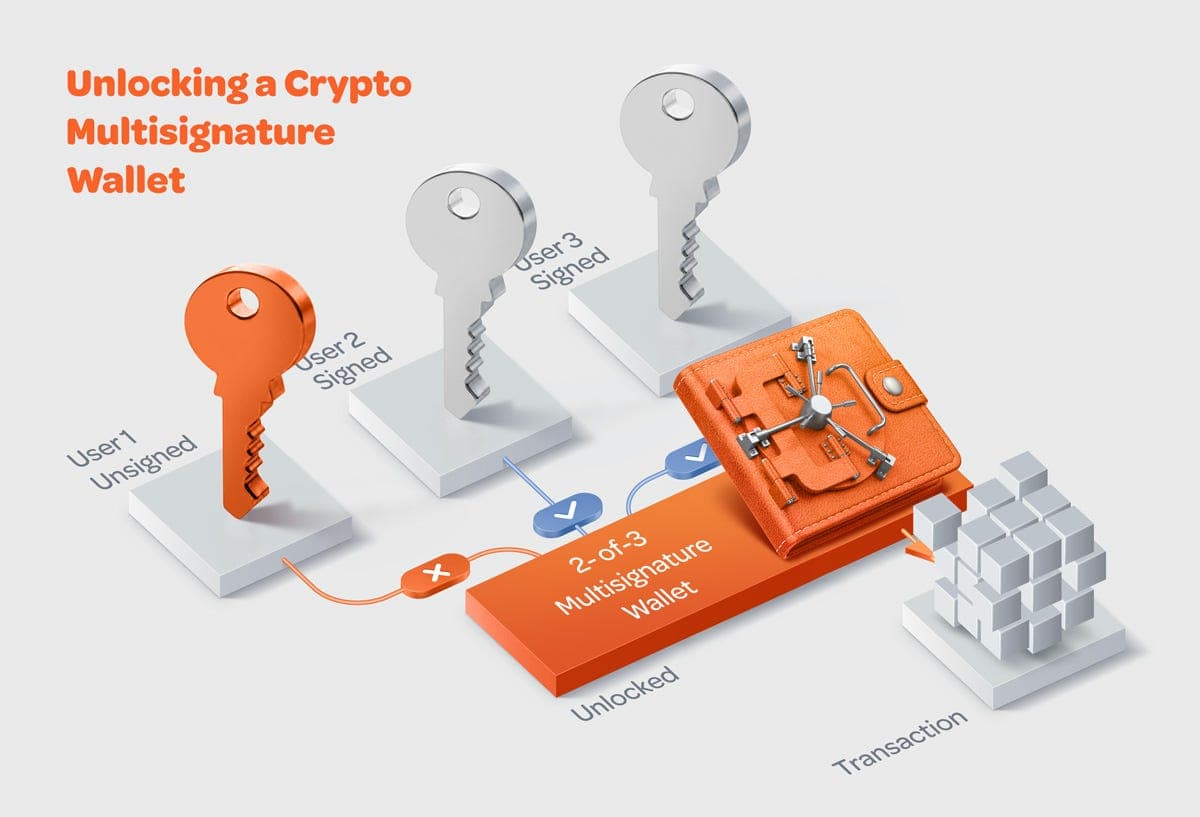
Table of Content
Distributed Signature Technology on Blockchain
Today, whether it's Bitcoin (Blockchain 1.0), Ethereum (Blockchain 2.0), or thousands of competing chains, each chain is like a local area network, unable to connect to the others — severely limiting blockchain's application space and preventing a true Internet of Value. For the cross-chain problem, today's mainstream approaches include: notary schemes, hash-locking, sidechain/relay technology, and the newest — distributed signature technology.
FUSION's distributed signature technology lets users cross-chain Lock-in their digital assets to the FUSION platform, and Lock-out to a designated account at any time. The first batch of supported mainstream currencies includes BTC, ETH, USDT, and ERC-20 tokens — covering over 90% of today's mainstream coins. This first-of-its-kind technology will become one of the important milestones in blockchain's history.
Bitcoin supports private-key signatures and multi-signature technology. Distributed signature is built on blockchain's most core cryptographic technology, combining algorithms such as distributed key generation, secret sharing, threshold signatures, commitment schemes, homomorphic encryption, and zero-knowledge proofs.
The table below compares the different signature technologies:
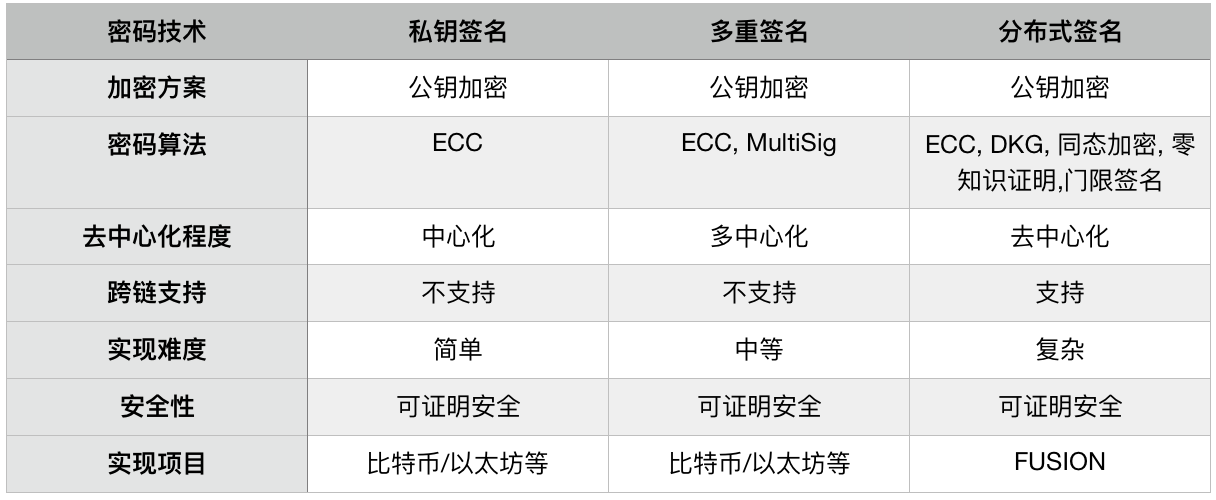
Comparison of signature technologies
Private-key signature
Public-key cryptography, invented in the 1970s, is the mathematical foundation of computer and information security — and the cornerstone of Bitcoin. Ownership of Bitcoin is established through public/private keys, addresses, and signatures. The keys aren't actually stored on the network; they're generated by the user and stored in a wallet file. The keys in a user's wallet are entirely independent of the Bitcoin network and can be generated and managed by wallet software without connecting to the chain. Public-key cryptography enables many of Bitcoin's properties, including decentralized trust, proof of ownership, and a security model based on cryptographic proof.
Every Bitcoin transaction needs a valid signature before it can be stored on the chain. Only the corresponding private key can produce a valid digital signature, so holding a copy of a Bitcoin private key means holding control of that account's Bitcoin. Keys come in pairs — a private key and a public key. The public key is like a bank account number; the private key is like the account password. In Bitcoin, the public key is used to receive coins, and the private key is used to sign transactions when spending. To pay, the current owner submits their public key and signature in the transaction; everyone on the network who receives it can verify it with the submitted public key and signature, confirming whether the transaction is valid — i.e., that the payer owns the coins at that moment.
Multi-signature
In February 2014, the MT.Gox exchange was hacked, losing nearly 850,000 BTC — about 7% of all Bitcoin, worth roughly $473 million at the exchange rate then. Frequent security incidents like exchange thefts spurred the rapid development of Bitcoin multi-signature, a milestone in Bitcoin's history. Put simply, Bitcoin multi-sig requires multiple private keys to sign and verify before the network accepts a spend — improving security, since a hacker would need to obtain enough private keys to move the coins.
Normally one Bitcoin address corresponds to one private key, and spending its coins requires the key holder to sign. Multi-sig requires multiple private-key signatures to be valid. For example, an address might correspond to 3 private keys, and at least any 2 of them must sign for a transaction to succeed; one alone is invalid. This 2-of-3 generalizes to any m-of-n — 3/3, 3/5, 6/11, etc. In Bitcoin the max n is 15; the most-used scheme today is 2/3.
Distributed signature
Blockchain's biggest trait is that no centralized node controls the whole network — yet today's mainstream crypto exchanges are controlled by one or a few aligned parties. When a user holding BTC wants to swap to ETH, the only option today is a centralized exchange. The fast-growing DEXs are mostly built on Ethereum and can only swap ERC-20 tokens.
FUSION's distributed signature technology solves cross-chain decentralized trust at the lowest cryptographic layer. After Lock-in, the digital assets are managed by thousands of decentralized nodes spread worldwide across the FUSION network using distributed-key algorithms — generating distributed private keys via DKG, handling ciphertext via homomorphic encryption, and achieving private communication via zero-knowledge proofs, finally realizing a distributed signature algorithm. These algorithms are provably secure, just like Bitcoin's cryptography. After Lock-in, the asset ledger is publicly recorded on-chain and tamper-proof; users can safely trust the open-source code and cryptography.
Use cases
-
Decentralized cross-chain trading: distributed signature solves the cross-chain problem, enabling transparent, fair, secure decentralized trading — and not just for ERC-20 tokens. Anything whose signature algorithm matches Bitcoin's can trade directly, meaning the vast majority of today's coins can be traded directly.
-
Mainnet-launch mapping: take the recent EOS mapping as an example — because EOS lacked cross-chain interaction with Ethereum, quite a few users lost their private keys during the complex mapping process and lost assets. Distributed signature gives FUSION a huge advantage. For users the mapping is dead simple — as convenient as getting cash from an ATM. In a FUSION-supported wallet, one tap: Lock-in the token, then Lock-out to get the native mainnet coin.
-
Bringing assets on-chain: built on public-key cryptography, distributed signature makes it possible to Lock-in any private-key-controlled digital asset to FUSION and circulate it as a token. Not just cryptocurrencies, but traditional financial assets — and real estate, cars, hotels, and other traditional assets. Tokenized circulation of assets enables many new business models.
Outlook
Blockchain's rise let people glimpse the promise of an Internet of Value, but existing networks still have many bottlenecks in interoperability and security, making it hard for crypto assets to transfer value across chains.
FUSION's distributed signature technology lets different cryptocurrencies Lock-in to a single public chain in a more innovative way, so these assets can run multi-currency smart contracts on the same chain — greatly improving the interoperability of the Internet of Value and becoming infrastructure for crypto finance. It's like a "highway" on the Internet of Value, easily enabling value transfer between digital assets and multi-currency smart contracts for crypto-financial services, driving the FUSION crypto-finance platform forward and co-building a brand-new ecosystem.